

Fake Vomit Roundup
Written by: Marie Chesaniuk, PhD
In the wonderful world of treating emetophobia, health anxiety, germophobia and fears of contamination and choking, sometimes we need to do exposures involving fake vomit. Using fake vomit is often a part of exposure with response prevention. Therapist and client together create a graded hierarchy of fears related to vomit, sickness, choking, or other related fear. Notably, fear of vomit is a multisensory experience that lends itself to breaking down fear of the full sickness experience into its component sensory elements. Read on for a tour of different elements of vomit-related fears and how to create them using various ingredients!
Visual Elements
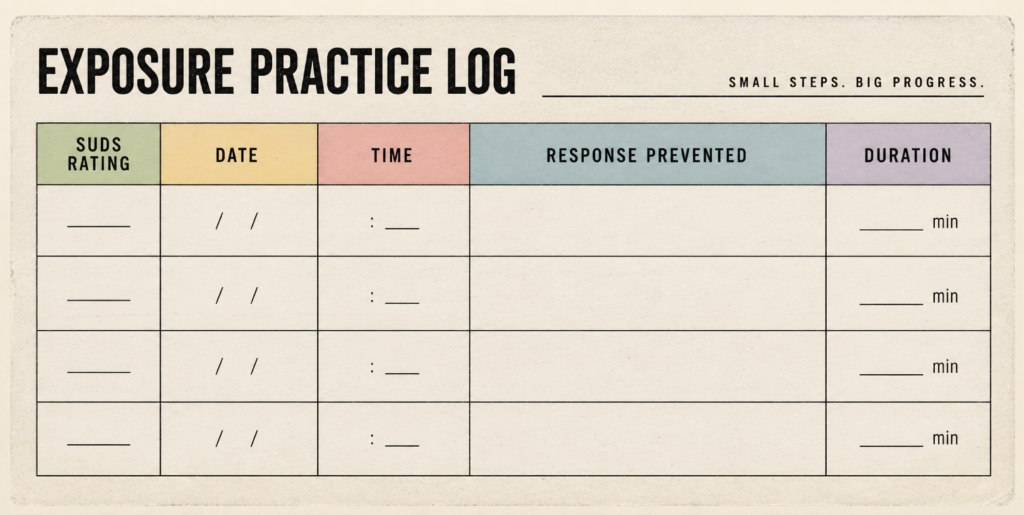
Many hierarchies begin by honing in on single sensory elements of the vomit experience, and visual elements are a common starting point. For visual elements, one does not need to start with fake vomit. Sometimes starting with imaginal exposures is enough of a trigger to start with. Imaginal exposures involve reading, listening to, or discussing stories involving vomit and using one’s imagination for the visuals. For some people, allowing oneself to think about their fear or talk about it is anxiety-inducing. Below is a table I use at the end of written imaginal exposures for clients to log their progress.
Beyond using one’s imagination for visual exposures, we may start by observing fake vomit. And yes, it is often still anxiety-inducing despite clients knowing it is not real. The exposure value comes from having sufficient cues to inspire the anxiety based on the appearance alone. For fake vomit exposures targeting witnessing vomit, you’ll want to have in-depth conversations with your client about the nature of situations they’ve found challenging so that you can incorporate personalized elements into your fake vomit exposure. For example, if they fear blood in vomit, you might want to incorporate blood-like coloring into your fake vomit. If they got sick after eating a certain food, you may want to incorporate that food into the fake vomit mixture.
Here are some ways to incorporate these visuals into your fake vomit!
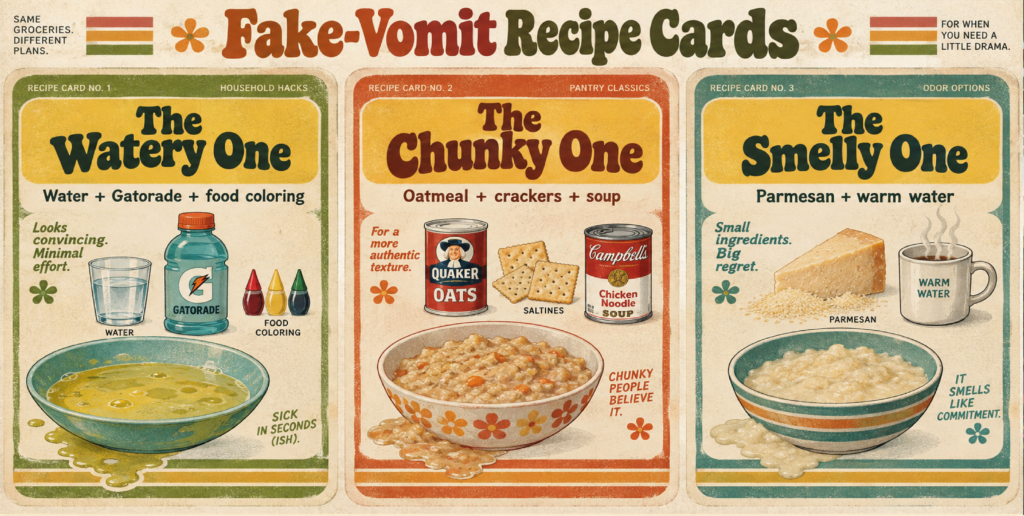
Depending on your client’s needs, your texture can range from thin and watery to thick and chunky.
Thin/watery ingredients:
- Water
- Soda can add both watery texture and darker color
- Gatorade and similar drinks can add an abundance of colors with a thin, watery texture
- Food coloring and paint can offer some pretty specific color options
- Other food options for color include cocoa powder, soy sauce, and other condiments that might provide specific colors (e.g., yellow mustard)
- Milk is another common ingredient and, depending on level of sourness or spoiledness, spans watery and more dense textures
Thick/chunky ingredients:
- Gelatin is a common thickening agent as well as vinegar or other acids to spoil milk can cause the milk to congeal and become a denser texture. Some gelatins may also introduce a color
- Yogurt, while a little more limited in colors, can also serve to thicken mixtures and the dairy can also interact with dairy spoiling ingredients to enhance smell, texture, and appearance
- Molasses, syrups, and liquid glue can increase texture viscosity as well as lend a shinier, slimy appearance to your fake vomit
- Various soups can also provide a combination of color and texture depending on the texture and chunkiness of the soup
- Cereals, chunks of bread, apple sauce or baby food, and oatmeal are popular thickening agents as well as crackers and water in whatever ratio gets you your desired texture
- Consider blending ingredients to achieve your desired texture and to create an appearance that hides the ingredients’ natural shape or appearance, for example blending cooked carrots or sweet potato can add both texture and a more orange color
- You can also try fake vomit toys
Lastly, consider the location or setting for your fake vomit. Sometimes the context adds to the visual sensory experience. For example, fake vomit in a large Ziploc bag is less realistic to the illness experience than an airplane sick bag, a sink, trashcan, or toilet.
Audio Elements
When targeting the sounds associated with vomit, audio recordings and impersonations of the sounds of gagging, coughing, and other related noises are often the main source of exposures. However, when creating an illness scene, one may need to consider the sounds made by certain ingredients of fake vomit, such as the sound of it hitting the water in a toilet or splattering on a floor or in a sink or bucket. More watery textures are easier to pour or splatter than very thick textures. The container used will also influence your ability to achieve your desired sounds. For example, pouring a vomit mixture out of a bottle requires a wider opening than a small tab opening on a soda can or small plastic soda bottle. You may want to add some chunkier elements to get a good splash sound when hitting water or an audible sound of chunks making impact against a metal sink or tile floor. Thicker mixtures offer a good ‘splat’ sound.
Smell or Olfactory Elements
When targeting the smells related to vomit, there are some pungent options. To start simply, grated parmesan cheese in hot water creates a foul smell without a full fake vomit mixture. When using a fake vomit mixture, spoiled or rancid milk and/or n-butyric acid, which provides the smell of “human gut fermentation.” Some soups (particularly condensed soups) offer an odor as well as using dry or wet pet food. Old dirty cleaning water, such as water previously used for mopping, combined with some pungent cleaning products can create a vomit-like scent. Be careful to avoid noxious fumes from cleaning products.
There are also a number of plants and flowers that give off a foul odor. Some options here include visiting your local botanical garden or plant conservatory if they have a corpse flower, carrion flowers, vampire lily, or eastern skunk cabbage, which smell like rotting flesh. Similarly, dead horse and dragon arums give off a similar scent. Walking by female ginkgo trees, Callery pear tree white blooms and/or marigold can approximate the smell of vomit similar to n-butyric acid. Be aware that some of these plants are poisonous if ingested by humans or pets.
Tactile Elements
Temperature and texture are the main tactile elements we are working with. If doing exposures targeting touching vomit, touching, holding, poking or squishing a Ziploc bag can be a good start! Consider the temperature (warm to room temperature are good for evoking fresh vomit. Colder temperature might be better for depicting vomit that has been left out and possibly dried up a bit (good for recreating situations in which one happens upon vomit unexpectedly or discovers it after the fact.)
You might graduate to directly touching the fake vomit (yes, I’ve touched the spoiled milk and other fake vomit mixtures!) and sitting with the discomfort and delaying washing hands. For some people, getting it on their clothes might be a concern which requires some clothes to sacrifice for the exposure. You can also practice cleaning up the vomit during tactile exposures. Depending on how many sensory elements you are ready to incorporate at a given time, you might adjust the smell, texture, visuals, etc. to meet your client where they’re at in their hierarchy.
Taste and Gustatory Elements
The taste of vomit is a powerful trigger for some people. There are vomit flavored jellybeans (also spoiled milk and rotten egg flavored jellybeans) or problem foods and textures you can incorporate to create a taste (or tactile mouth) exposure if that is part of your treatment plan. Sometimes leaving a bad taste in one’s mouth is enough to trigger anxiety or using other items that have become associated with getting sick (the specific flavor of Gatorade they were drinking the last time they got sick, or the specific mints they used afterward that now carry the association with vomit, for example.) Pretending to throw up is a common exposure in this type of treatment. Some people swear by Trader Joe’s pea soup for re-enacting getting sick!
Always be careful to avoid any foods, plants, or substances that your client is allergic to.
The best exposures are steeped in your client’s personal experience, so use this round up to enhance exposures tailored to your client’s treatment goals and prior experiences!
About Us
Learn more
Our Care
Learn more
What We Treat
Learn more